Guides
Bell Riose
January 24, 2025 · 5 min read
Static vs dynamic QR codes: which one do you need?
Bell Riose
January 24, 2025 · 5 min read
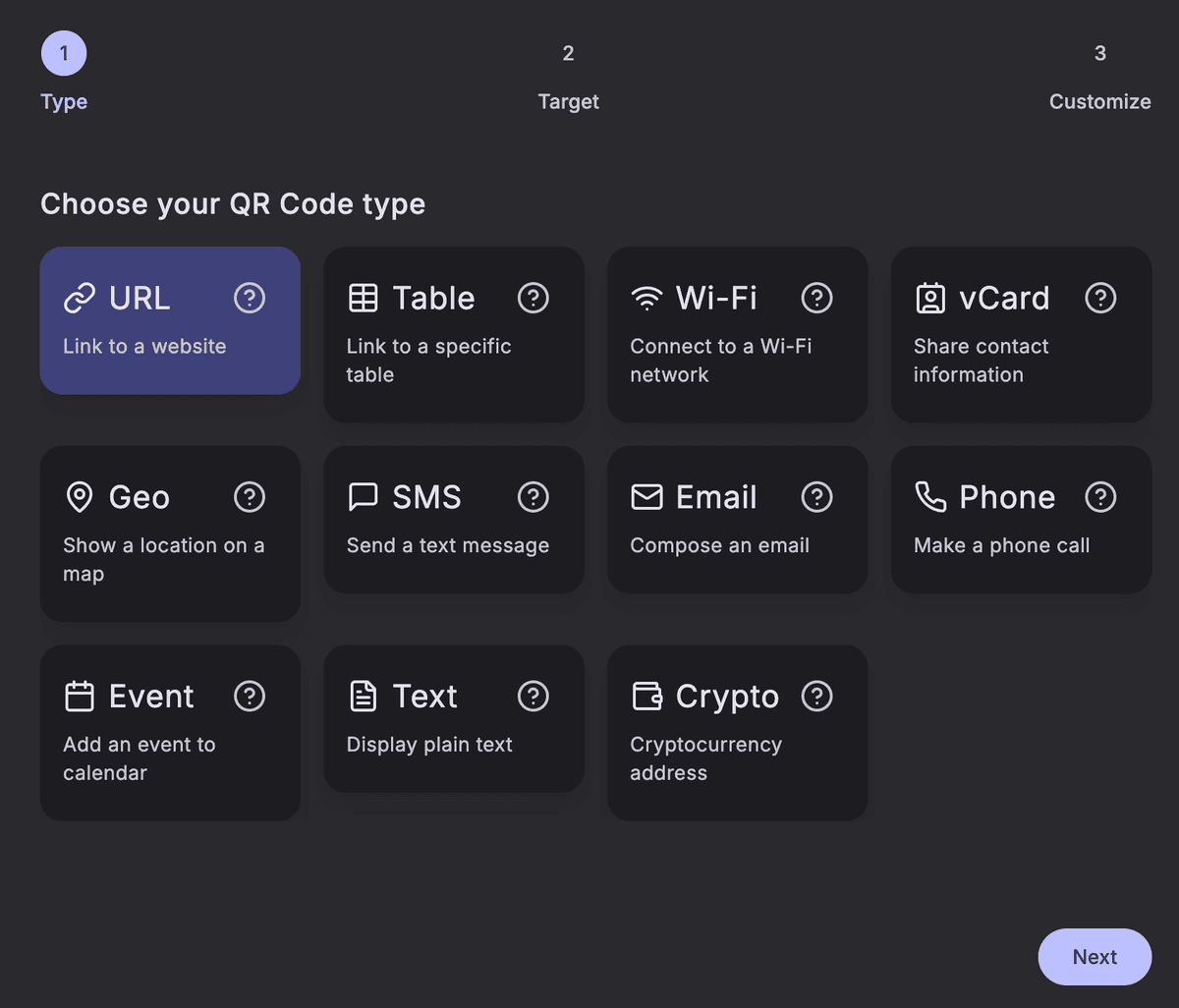
It's the first decision you'll make when creating a code in Pipao, and it shapes everything that follows. The good news: the rule of thumb is simple, and below we break down exactly how the two differ.
A static QR code encodes the destination directly into the black-and-white pattern. Whatever you point it at is baked in at creation, so the code is fixed forever — no edits, no scan tracking.
A dynamic QR code encodes a short redirect URL instead. The pattern stays the same, but you can change where it sends people anytime, and every scan is counted. That's why dynamic is the right call for anything that might evolve.
Fixed forever. Free, simple, and perfect for a permanent link or a vCard. No editing and no scan tracking — change the destination and you reprint.
Editable anytime without reprinting, with full scan analytics. The right choice for campaigns, packaging, and anything that changes over time.
| Capability | Static | DynamicPopular |
|---|---|---|
| Editable after printing | ||
| Scan analytics | ||
| Reprinting needed when the link changes | ||
| Cost | Free | Free to start, paid to scale |
| Best for campaigns | ||
| Printed & shipped to you by Pipao |
The first five rows are true of static vs dynamic codes generally. The last row is Pipao's difference — most generators hand you an image and leave you to find a designer, a print shop, and a courier. With a dynamic code in Pipao, you design it, we print it, and it arrives at your door ready to use.
Static is plenty when nothing about the code will ever change:
Static codes are free and never expire, so for genuinely permanent, set-and-forget uses they're a fine choice.
Pick dynamic whenever the destination might change or you want to learn from your scans:
This is the part other QR tools skip. In Pipao you go from idea to a physical, in-hand code in one place:
Because the code is dynamic, you can keep editing where it points long after it's printed and on your table or packaging. Want the full walkthrough? See design-to-doorstep: dynamic QR codes, printed and shipped.
Use a static QR code when the destination will never change and you don't need analytics — like a permanent vCard. Use a dynamic QR code when the link might change, when you want scan analytics, or when you want Pipao to print and ship the finished code to your door.
No. A static QR code encodes the destination directly into the pattern, so it's locked at print time. Changing it means generating and reprinting a new code. A dynamic QR code points to a short redirect URL, so you can edit where it goes anytime without reprinting.
Often, yes. Even for a single event, a dynamic code lets you fix a typo'd link after posters are printed and see how many people scanned. With Pipao you can buy a dynamic code as a one-time purchase — no subscription required — and have it printed and shipped to you.
With Pipao, your dynamic codes keep working as long as your account is active — they don't expire after a set number of scans on the right plan. The pattern itself never wears out; only the redirect destination can change, and only when you choose to change it.
Both. Pipao closes the full loop: design your code, customize the branding, pick a print template, then we print it and ship the finished QR code to your door. No separate designer, print shop, or courier — that's our design-to-doorstep difference.
Make the call once, and the rest of the setup takes less than a minute. Create your QR code in Pipao — static or dynamic, designed, printed, and shipped from one place.