Bell Riose
November 12, 2024 · 9 min read
What are the different types of QR codes? A complete guide
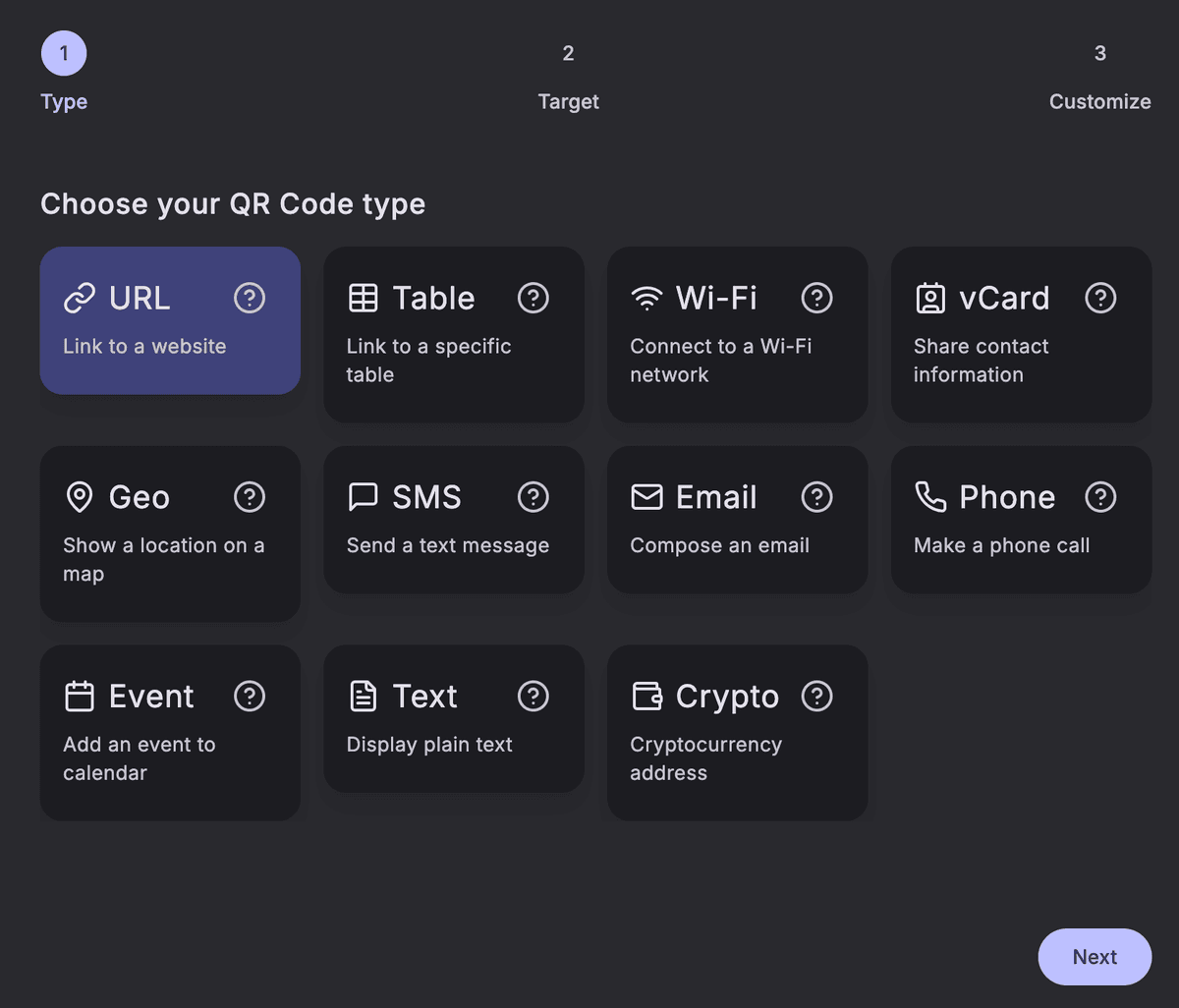
Most "types of QR codes" guides only cover a handful. This one covers all 11 that Pipao supports, explains the static-vs-dynamic choice that sits underneath every one of them, and shows where Pipao does something no other QR tool does: print the finished code and ship it to you. Let's break it down.
How are QR codes categorized?
There are two questions to answer for any QR code:
- What does it do? This is the type — URL, Wi-Fi, vCard, and so on. The type decides what happens when someone scans.
- Can it change later? This is the behavior — static or dynamic. Static is fixed forever once printed; dynamic can be edited anytime without reprinting, and it tracks scans.
Every purpose-built type below can be made dynamic in Pipao, which is what lets you update content and measure performance after the code is already out in the world. For a deeper look at that choice, see static vs dynamic QR codes: which one do you need?.
What is the difference between static and dynamic QR codes?
A static QR code bakes the destination into the printed pattern. Change the link and you have to generate and reprint a new code. A dynamic QR code points to a short, editable address you control — so you can swap the destination, fix a typo, or repurpose the code for a new campaign without touching the print.
Fixed forever. Free and simple, perfect for a permanent link or a vCard. No editing after printing and no scan tracking.
Editable anytime without reprinting, with full scan analytics. The right choice for campaigns, menus, and anything that evolves.
What is a URL QR code?
A URL QR code sends a scanner straight to any web address — your homepage, a landing page, a product, or a booking link.
- Great for: websites, campaigns, promotions, app store links, and packaging.
- Key benefit: Made dynamic, you can change where it points anytime without reprinting, and see how many people scanned it and where.
What is a Table QR code?
A Table QR code is the entry point to contactless table ordering — and it's the one most food and drink venues come to Pipao for. You place one code on each table; guests scan it to open your live menu and order from their seat, no app to download.
- Great for: cafés, fast food, ice cream shops, restaurants, and shisha/hookah lounges.
- Key benefit: Connects each table to a real menu and live order tracking, so you stop reprinting paper menus and stop taking every order by hand. It's part of Pipao's Premium ordering system ($9.99/month).
What is a Wi-Fi QR code?
A Wi-Fi QR code lets guests join your network by scanning instead of typing a password.
- Great for: cafés, restaurants, events, and any space offering guest Wi-Fi.
- Key benefit: A smoother guest experience — no shared passwords on a chalkboard, just a scan and connect.
What is a vCard QR code?
A vCard QR code saves your contact details — name, phone, email, company — directly into the scanner's phone.
- Great for: business cards, networking events, and sales teams.
- Key benefit: No manual typing and no transcription errors, so your contact info lands accurately every time.
What is a Geo QR code?
A Geo QR code opens a specific location on the scanner's map app.
- Great for: storefronts, event venues, delivery pickup points, and real estate.
- Key benefit: One scan to turn-by-turn directions, so people actually find you.
What is an SMS QR code?
An SMS QR code opens a new text message pre-filled with your number and, optionally, a message.
- Great for: support shortcuts, opt-in keywords, and quick feedback.
- Key benefit: Lowers the friction of starting a conversation to a single scan.
What is an Email QR code?
An Email QR code opens a new email pre-addressed to you, with an optional subject and body.
- Great for: inquiries, support requests, and lead capture.
- Key benefit: Removes the "what's your email again?" step entirely.
What is a Phone QR code?
A Phone QR code dials your number when scanned.
- Great for: service businesses, reservations, and help lines.
- Key benefit: Turns a poster or card into a one-tap call.
What is an Event QR code?
An Event QR code adds an event — with date, time, and location — straight to the scanner's calendar.
- Great for: gigs, exhibitions, pop-ups, workshops, and launches.
- Key benefit: Guests save the date in one scan, so fewer people forget to show up.
What is a Text QR code?
A Text QR code displays a plain block of text when scanned — no link required.
- Great for: instructions, short notices, codes, or messages.
- Key benefit: Shares information instantly, even offline, with nothing to click.
What is a Crypto QR code?
A Crypto QR code encodes a wallet address (and optional amount) to make sending a payment quick and error-free.
- Great for: accepting crypto payments or tips.
- Key benefit: Removes the risk of mistyping a long wallet address.
Which type of QR code should you use?
Match the type to the job, then decide static vs dynamic. This table shows why dynamic wins for almost anything that lives in the real world — and the row no other QR tool can tick:
| Capability | Static | DynamicPopular |
|---|---|---|
| Editable after printing | ||
| Scan analytics | ||
| Works for table ordering / menus | ||
| No expiry | ||
| Best for permanent links | ||
| Best for campaigns & promotions | ||
| Printed & shipped to you by Pipao |
A quick rule of thumb:
- Permanent contact card? Static is plenty (or use a dynamic vCard if details may change).
- Restaurant or café table? Table QR code, every time.
- Promotion that ends next month? Dynamic — repurpose the code later instead of reprinting.
- Want to know how many people scanned, and where? Dynamic.
The part other QR tools skip: print and ship
Picking a type and making it dynamic is only half the job — you still need the code on something physical. Most generators hand you an image and leave you to find a designer, a print shop, and a courier.
Pipao closes the whole loop in one place: create your code, customize it, choose a print template, buy it, and we print and ship the finished QR code to your door. That design-to-doorstep loop is the one thing competitors don't do — read more in design-to-doorstep: dynamic QR codes, printed and shipped.
Frequently asked questions
What are the different types of QR codes?
QR codes are grouped two ways. By behavior, they're either static (fixed at print time) or dynamic (editable anytime). By purpose, Pipao offers 11 types: URL, Table, Wi-Fi, vCard, Geo, SMS, Email, Phone, Event, Text, and Crypto — each built for a specific job.
What is a Table QR code?
A Table QR code is the entry point to contactless table ordering for cafés, fast food, ice cream shops, restaurants, and shisha lounges. You place one code per table; guests scan it to open your live menu and order from their seat. It's part of Pipao's Premium ordering system at $9.99 a month.
What is the difference between static and dynamic QR codes?
A static QR code is fixed when you print it — change the destination and you must reprint. A dynamic QR code lets you edit where it points anytime without reprinting, and it tracks scans. Choose static for permanent links, dynamic for anything that might change or that you want to measure.
Can a QR code be printed and shipped to me?
Yes. Pipao closes the full design-to-doorstep loop: create your code, customize it, pick a print template, buy it, and we print and ship the finished QR code to your door. No separate designer, print shop, or courier needed — it's the one thing other QR tools don't do.
Which QR code type should I choose?
Match the type to the job. Use URL for a web page, Table for restaurant ordering, Wi-Fi for guest access, vCard for contact sharing, Event for RSVPs, and so on. For behavior, pick dynamic whenever the content might change or you want scan analytics — you keep the flexibility to update later.
How many QR codes can I create for free?
Pipao's Free plan lets you start creating dynamic QR codes at no cost so you can try the platform. Premium ($9.99/month) unlocks more codes, more scans, and the food and drink table-ordering system. Individuals running a one-off event can also make one-time purchases without a subscription.
Ready to pick your type? Create your first QR code — make it dynamic, brand it, and we'll print and ship it to your door.